
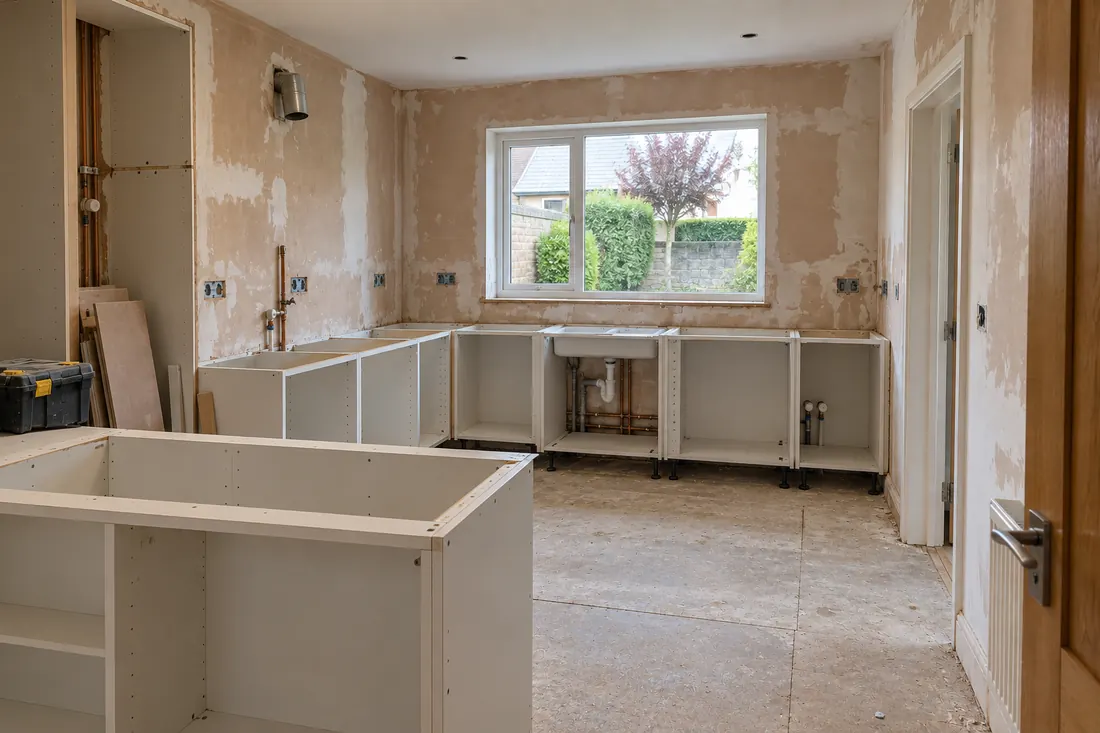
Overview
Plastering prepares damaged or uneven interiors for finishing. We assess the substrate, moisture and existing cracks before deciding between patch repair, skimming or a wider repair. Decoration is scheduled after the surface has dried sufficiently.
What is included
The final quote confirms which items are included in your project.
- Wall plastering
- Ceiling plastering
- Skimming
- Patch repairs
- Crack repair
- Damaged wall repair
- Preparation for painting
- Interior finishing
Typical work list
- Wall plastering
- Ceiling plastering
- Skimming
- Patch repairs
- Crack repair
- Damaged wall repair
- Preparation for painting
- Interior finishing
Who this service is for
Homeowners, landlords, apartment owners and commercial property managers.
Project stages & expected timeline
Use the following as a planning sequence, not a guaranteed duration. Any day ranges are illustrative and may overlap.
Surface assessment
Check damage, adhesion and possible moisture sources.
Preparation
Protect surrounding areas and prepare sound surfaces.
Plastering or repair
Complete the agreed patching, repairs or skim.
Drying and decoration
Allow drying appropriate to the product and conditions before decorating.
Project duration depends on size, condition, materials, access and the final agreed scope of work.
What can affect the timeline
- Existing condition and hidden damage
- Final scope, design and material availability
- Access, occupied rooms and working hours
- Drying, curing and specialist trade coordination
Preparing for the work
- Identify any ongoing damp or leaks.
- Clear walls and move furniture where practical.
- Tell us whether decorating should be included.
Frequently asked questions
Can a small damaged area be repaired?
Yes. Photos help determine whether a patch or a wider repair may be needed.
Can painting start immediately?
Fresh plaster needs suitable drying time. The surface condition and product guidance determine when decoration can begin.
Will a crack come back?
A cosmetic repair cannot resolve an underlying movement or moisture issue. Possible causes should be assessed first.